





Ayers Rock (also known as Uluru) is one of Australia’s most famous landmarks and one of the world’s most famous rocks. In the heart of Central Australia, this massive sandstone monolith and its neighbour Kata Tjuta (also known as the Olgas) make up the Uluru-Kata Tjuta National Park. Managed by Parks Australia, this park is a destination for visitors from around the world, and it has natural beauty, geological history, and cultural heritage. This article gets into the science behind Uluru’s colours and formations and weaves that in with the cultural significance for the Aboriginal people, the traditional owners of this land.
The Geology of Uluru

The story of Uluru’s creation began 550 million years ago during a period of intense geological activity. At that time, Central Australia was an ancient river delta where layers of sand, mud and gravel were deposited. These sediments were compacted into sedimentary rocks, conglomerate, and arkose sandstone, which formed the base of what would become Uluru.
Millions of years later, tectonic forces associated with mountain building lifted these rock layers to form the Petermann Ranges, a massive mountain range that once dominated the landscape. The Uluru we see today is a remnant of that range, a continuous piece of rock that has survived the test of time. This process of creation is a reminder of the dynamic nature of the Earth’s crust, where forces of uplift, erosion and deposition are always shaping the landscape.
The rocks that make up Uluru are arkose sandstone, which is rich in feldspar. This type of sandstone is bright in colour, especially at sunrise and sunset. But beneath the surface, the rock layers are grey, a reminder of the original sedimentary rocks that formed in the ancient river delta. The different types of rock in the region, including Mount Conner and Mount Augustus, show the geological diversity of Central Australia.
Iron Oxidation

One of the most striking things about Uluru is its colour change throughout the day, which attracts thousands of visitors to the Uluru-Kata Tjuta National Park each year. This colour change is due to the oxidation of iron in the arkose sandstone. When the iron minerals in the rock are exposed to air they undergo a chemical reaction similar to rusting and that’s what creates the red colour of Uluru. This process of oxidation is what gives Uluru its colour, especially during sunrise and sunset.
The colour change of Uluru is more than just a pretty sight; it’s a reflection of the rock interacting with the environment. The angle of the sun’s rays is key to how we see the colour. During the day, Uluru can be red, orange, or purple, depending on the light. The red is most intense at sunrise and sunset when the low angle of the sun brings out the iron oxide. That’s why Uluru is one of the most photographed natural wonders in the world. People come from all over to see the colour change.
Erosion and Weathering
Erosion and weathering are the main processes that shape Uluru and other big monoliths like Kata Tjuta and Mount Olga. Over millions of years the forces of nature have sculpted Uluru into its current shape, creating the steep valleys, deep grooves and massive rock formations that make it so unique. The erosional processes at work are wind, rain and temperature fluctuations all of which wear away the rock surface.
One of the main erosional processes affecting Uluru is exfoliation. This is when temperature changes cause the outer layers of the rock to expand and contract. Over time this repeated stress causes the outer layers to peel away, revealing new surfaces underneath. This process of rapid erosion is responsible for many of the surface features we see on Uluru today, the deep valleys and steep ridges.
Wind and rain also play a big part in shaping Uluru. Wind erosion, driven by the harsh desert winds of Central Australia, wears away the surface of the rock, and although rain is scarce, it can cause chemical weathering, adding to the rock’s character. The combination of these erosional processes over millions of years has created Uluru, one of the most iconic natural wonders in the world.
Uluru meaning

For the Anangu people, the traditional owners of Uluru, this big rock is more than just a geological wonder; it’s a place of deep cultural and spiritual importance. Uluru is a sacred site connected to Tjukurpa, the creation period when ancestral heroes and spirits shaped the land. According to Anangu stories, Uluru was created by the actions of these ancestral beings who left behind the rock’s features as a sign of their presence.
Uluru has a rich cultural and formation history, and many of the rock’s features, such as caves, crevices and rock art, hold deep knowledge and spiritual meaning. These sacred sites are central to the Anangu people’s cultural practices, and many areas of the rock are closed to visitors due to their cultural significance. The Anangu believe Uluru is inhabited by ancestral spirits, and the rock is still used today for traditional ceremonies and rituals.
Rock art at Uluru gives us a glimpse into the cultural history of the Aboriginal people who have lived in this area for thousands of years. These ancient paintings depict creation stories, hunting trips and daily life. Rock art is an important part of the Anangu people’s cultural heritage, and we work to preserve these sites for future generations.
Uluru-Kata Tjuta National Park
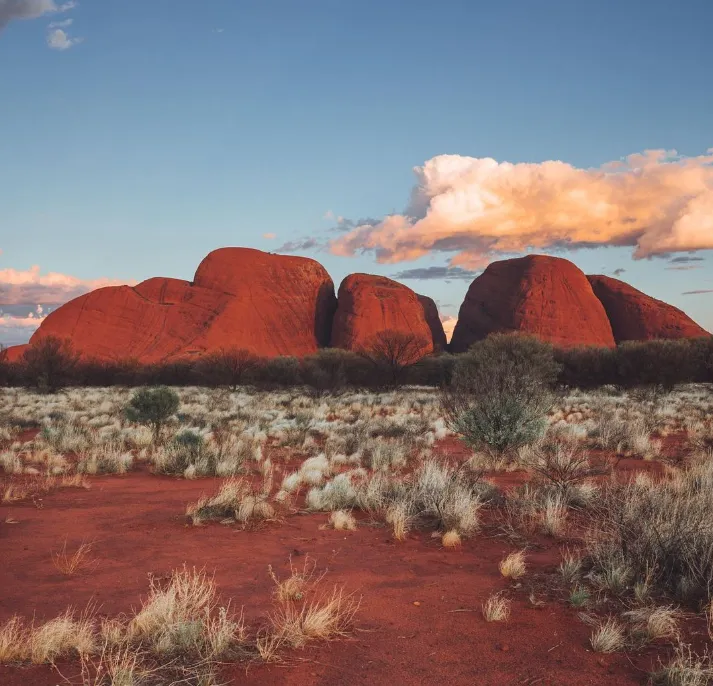
Uluru-Kata Tjuta National Park is a place of natural wonder and a UNESCO World Heritage Site where conservation and tourism are balanced. The park has many types of rock, desert plants and animals including the Rufous Hare-wallaby and desert skink, both of which are found only in this region. The park is a destination for visitors from all over the world who come to see its natural beauty and cultural importance.
Parks Australia in partnership with the Anangu people manage the park with a focus on conservation and cultural preservation. One of the big challenges is managing the impact of tourism on the environment and sacred sites. While Uluru is a popular tourist destination with tourist facilities such as the Ayers Rock Resort, we ensure that tourism doesn’t harm the natural or cultural heritage of the area.
Conservation at Uluru-Kata Tjuta National Park includes measures to prevent erosion, protect native flora and fauna and preserve cultural sites sacred to the Anangu people. These efforts are guided by the principle of looking after the land, a concept deeply embedded in the cultural knowledge of the Aboriginal people. The Anangu people’s connection to the land is based on thousands of years of detailed knowledge of the environment, which is now being integrated into modern conservation practices.
FAQ
What does Uluru mean to the Aboriginal people?
Uluru is a sacred site for the Anangu people, the traditional owners of the land. It’s connected to their creation stories, Tjukurpa, and is a living cultural landscape with ancestral spirits.
How does Uluru change colour?
Uluru changes colour due to the oxidation of iron in the arkose sandstone and the angle of the sun. The red is most vibrant at sunrise and sunset.
What’s the geological history of Uluru?
Uluru was formed over 550 million years ago when layers of sand and gravel were deposited in an ancient river delta. Tectonic forces then lifted these sedimentary rocks to form the big rock we see today.
How is Uluru protected from damage?
Uluru is part of Uluru-Kata Tjuta National Park, managed by Parks Australia in partnership with the Anangu people. Conservation is about preventing erosion, protecting native species and cultural sites.
Can I climb Uluru?
No, climbing Uluru is closed since October 2019. Learn about cultural history through guided Uluru camping tour and programs.